
Struggling to eat well in menopause? Here’s how a dietitian approaches it
Trying to eat well in menopause, but finding it harder than ever? Registered dietitian Laura Clark, who works with midlife women, explains why doing it “perfectly” so often leads to falling off track, and what she suggests instead.
Many of the women I see in clinic tell me the same thing in midlife: they’re trying hard to eat well, and then one off-plan day or a run of tired evenings and it all falls apart. This is made worse by never-ending lists of what you should and shouldn't eat during perimenopause and menopause.
There’s a particular response many of us have when something isn’t working: try harder. Eating more in the evenings than you meant to? Get a grip. Can’t make the healthy habits stick? You’re clearly not motivated enough.
As a registered dietitian and food therapist, I’m drawn to a different question. Most of us already know a fair bit about eating well. What’s harder is doing it on a busy Tuesday, when you’re tired, the day has been long and dinner is still undecided. So rather than asking “what should I be eating?”, I’m usually more interested in this: why is this happening in the first place?
When your body changes the rules
Around the menopause transition, sleep, appetite and energy can all shift, and strategies that used to help us feel our best can stop producing the familiar result.
The instinct is to be stricter: eat less, track more, push harder. But this is often exactly when a little more flexibility and compassion will serve you better than a firmer grip.
Behaviour is information
Take the classic 6pm kitchen scenario: walking through the door and immediately picking at whatever’s in reach.
It’s easy to decide that’s a willpower problem and ban snacks from the house. Or we could get curious instead. What did lunch look like, and how long ago was it? Is this the first quiet moment of the day? Is food offering a transition between work and home, a bit of comfort or decompression, five minutes that belong to no one else?
Suddenly it’s not a lack of discipline. It’s a behaviour that makes complete sense, and that gives us something far more useful to work with than another rule.
Why all-or-nothing rarely lasts
Our relationship with food is a blend of biology, psychology and environment, and the advice we’re surrounded by tends to simplify it. All-or-nothing plans and strict food rules sound compelling, particularly when our usual approaches aren't working.
The trouble is that they leave no room for real life. We hand the decision-making to the rulebook and lose touch with the part of us that’s flexible and kind. I call the voice that takes over the “harsh lady with the clipboard”: all standards, no give, forever demanding that we try harder. When willpower inevitably runs low, one “off-plan” meal can feel like the whole effort is ruined, and the “what the hell” effect kicks in. We might swing between the two for weeks, and the more often we do, the longer it takes to recover.
Real life calls for habits that can flex to what you need on a given day. And that need changes with sleep, stress, workload, exercise and hormones. So does the energy you have available to meet it. That’s why I like to think of nourishing habits as a toolkit rather than a plan: some days there’s capacity to cook from scratch, and other days a different tool is the sensible one.
Where to start
- Get curious. Next time you catch yourself thinking “why can’t I just eat better in the evenings?”, try not to finish the sentence with a judgement. Stay with the why instead. What’s getting in the way? Am I under-fuelled, overwhelmed, tired, bored or just genuinely hungry?
- Tune in. Think of hunger as a range rather than an on/off switch. Before and after you eat, pause for a moment and ask, “how hungry or full am I feeling right now?” There’s no right answer. You’re just noticing, without judging and without immediately overriding it.
- Make peace with “good enough”. It’s easy to believe that if something can’t be done perfectly, it isn’t worth doing. If I haven’t got the time to cook properly, I won’t bother. That thinking is paralysing, and it rules out exactly the small, imperfect actions that help most.
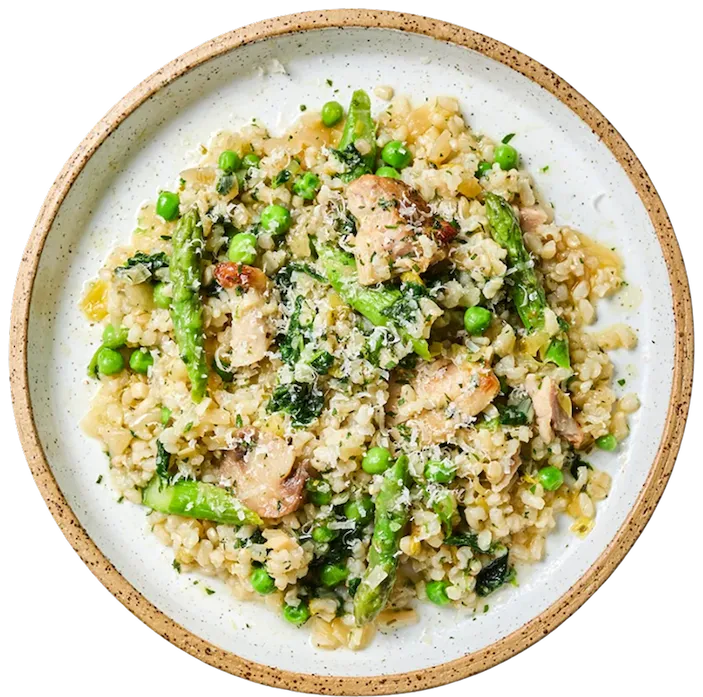
- Match the tool to your capacity. This is where ready prepared meals earn their place in the toolkit. Capability isn’t the same as capacity: you may know exactly how to put together a balanced dinner and simply not have the energy for it at 6pm after a draining day, a poor night’s sleep or a week of back-to-back demands. On those days, having something nourishing ready to heat is a sensible strategy, not a failure. It takes one decision off a full plate, so you’re far less likely to end up grazing at the counter or skipping the meal altogether. Ranges like Field Doctor’s, built around particular needs such as high protein or menopause, can help you cover the basics when cooking from scratch isn’t on the cards. On days with more energy, you cook. Neither is better, and both can sit in the same week.
- Keep the basics simple. The basics aren’t glamorous, but they’re remarkably effective, and they’re sustainable. You don’t need to count calories or follow a plan to get them right. A rough checklist will do:
- Protein at every meal. It supports muscle, keeps you fuller for longer and matters more in midlife than ever.
- Fibre from plants. Vegetables, fruit, wholegrains and pulses. Aim for variety rather than perfection.
- Carbohydrates, without apology. Your brain and energy levels need them.
- Regular meals. Skipping earlier in the day is often what sets up the 6pm kitchen scenario in the first place.
- Something you enjoy. Satisfaction isn’t a bonus. It’s part of what makes eating well sustainable.
Tick these boxes more often than not and you’re doing the fundamentals well, whether the meal was cooked from scratch, assembled from the fridge or heated from a ready prepared box.
Small and repeated
You don’t need to aim for nutritional perfection to feel good. Success usually looks like something small that you do again and again until it becomes steadying. It won’t feel like much at first, but small, consistent noticing is a skill you can learn, and it paves the way for food decisions that feel a whole lot more nourishing.
If you’d like support to create a more nourishing relationship with food, you can find out more here.
related content
April is IBS Awareness Month, and we want people with IBS to fall in love with food again. We understand how frustrating mealtimes can be for those with IBS, and in this article offer 10 top tips to help manage IBS and enjoy food again.
And what makes cholesterol "good" or "bad"? Our guide covers FAQs such as what cholesterol is, how to lower cholesterol through diet, and the difference between cholesterol types.
more content:
This month, we’re looking at how you can add more fibre to your diet, because 91% of UK adults aren’t eating enough of it. We asked our Dietitian Laura to start by explaining why fibre matters, and what you can gain from eating more.
If you're struggling with strict calorie counting, shifting your focus instead to portion control and resizing your meals may be a healthier and more sustainable approach. Learn the science behind portion control, nd our suggestions of how to structure and size your portions for healthy, long-term weight loss.
Brazil Nuts are one of Field Doctor's hero ingredients, being packed full of essential nutrients and providing many key health benefits. Check out our guide to Brazil Nuts, alongside how to incorporate more of this nut into your diet.
There a a variety of small changes you can try to reduce food waste, from simple meal planning to composting food scraps. Our easy guide outlines 10 top tips you can try at home.
It is often a concern that eating a vegetarian diet means you have to miss out on certain nutrients. This doesn't have to be the case if you are aware of possible nutrient deficiencies and ensure you incorporate sources of these in your meals.
The hardest part about a healthy diet is keeping it going, which is why we've rounded up some practical tips and small nudges to help keep you on track with your diet.
Ensuring you get the right nutrients on any kind of diet is essential - let alone combining more than one! Our guide aims to outline what foods you can eat while following a vegan and low FODMAP diet, including vegan and low FODMAP protein sources, calcium sources and iron sources.
browse our ranges.
choose from one of our ranges or personalise your own menu from 60+ meals.
- low FODMAP

- eat well, live well programme
- gluten free

- high protein

- weight management

- GLP-1
- ibs

- lowest calorie

- lower carbs

- mediterranean
- smaller range

- PMOS (formerly PCOS)

- menopause

- heart healthy

- full menu

- gift cards
not sure where to start?
take 30 seconds to find your personalised meal plan.